People
Geddy Lee Net Worth From Toronto Rocker to Music Millions


Geddy Lee’s net worth is estimated at $50 million in 2026 by Celebrity Net Worth. Best known as the voice and bassist of Rush, the Canadian musician built his fortune through decades of successful albums, international tours and songwriting. But his story goes beyond rock music, extending into rare baseball memorabilia, vintage instruments and a remarkable return to the stage.
In December 2023, a baseball signed by former U.S. President Herbert Hoover sold for $214,200. It belonged to Lee, whose lifelong passion for collecting had grown into something almost as extraordinary as his musical career.
From Toronto Clubs to Rush
Born Gary Lee Weinrib in Toronto on July 29, 1953, Lee grew up in a family shaped by his parents’ survival of the Holocaust. His nickname came from his mother’s accented pronunciation of Gary, eventually becoming the name known to millions of rock fans.
Lee joined Rush in September 1968, at the request of his childhood friend, guitarist Alex Lifeson. He replaced original bassist Jeff Jones, joining Lifeson and drummer John Rutsey. In 1974, Neil Peart replaced Rutsey, completing the lineup that would define Rush’s sound for decades.
Success was hardly immediate. Rush struggled commercially with its 1975 album Caress of Steel, prompting pressure to produce more accessible music. Instead, the group released the ambitious 2112 in 1976.
The gamble worked. The album helped establish Rush as a major progressive-rock act and gave the musicians freedom to follow their own creative instincts.
The Albums That Built His Fortune
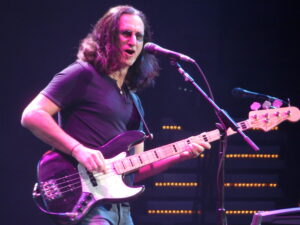
Geddy Lee performing with Rush at the Xcel Energy Center on May 22, 2008. Photo: Matt Becker / Wikimedia Commons, CC BY 3.0.
Rush reached a new commercial peak with Moving Pictures in 1981. Featuring “Tom Sawyer,” “Limelight” and “YYZ,” the album became a defining release in the band’s catalog and achieved five-times-platinum certification in the United States.
Across its career, Rush sold more than 45 million albums worldwide. Its loyal audience supported decades of concerts, recording projects and anniversary releases.
Lee’s role was particularly demanding. He frequently handled lead vocals, bass guitar and keyboards, sometimes switching between instruments during the same performance.
That versatility became one of Rush’s trademarks, helping the band develop a reputation for technical excellence.
A Baseball Collection Worth Millions
Outside music, Lee developed a fascination with baseball history.
He collected signed baseballs, bats and memorabilia associated with legends including Babe Ruth and Lou Gehrig. In December 2023, part of his collection appeared in auctions organized by Christie’s and Hunt Auctions.
The two auctions generated approximately $6.86 million combined, with the sale featuring items from Lee’s collection alongside memorabilia from other collectors. His Herbert Hoover-signed baseball was among the notable sales.
His collecting interests also inspired Geddy Lee’s Big Beautiful Book of Bass, published in 2018, which explored the history and craftsmanship of vintage bass guitars.
Life Beyond Rush
Following Rush’s final R40 concert in 2015 and Peart’s death in 2020, Lee explored different creative projects.
His 2023 memoir, My Effin’ Life, offered an unusually personal account of his childhood, family history and relationships with his bandmates.
He also appeared in Geddy Lee Asks: Are Bass Players Human Too?, a documentary series featuring conversations with fellow musicians.
These projects revealed a performer whose interests extended well beyond the concert stage.
Rush’s Unexpected Return
In October 2025, Lee and Lifeson announced the Fifty Something tour, honoring Peart while bringing Rush’s music back to audiences.
The concerts began in June 2026, with drummer Anika Nilles and keyboardist Loren Gold joining the touring lineup.
On November 5, 2026, Rush announced another milestone: a five-night residency at Sphere in Las Vegas, scheduled for May 21, 23, 26, 28 and 30, 2027.
For a band whose live performances had seemingly ended eleven years earlier, the return marked an extraordinary new chapter.
Conclusion
Geddy Lee’s journey from Toronto clubs to international rock fame was built on creativity, persistence and an unwillingness to follow musical conventions.
His albums, performances and collecting passions reflect a career that has remained interesting long after its earliest successes.
And with Rush performing again, the musician who helped redefine progressive rock is still finding new ways to connect with the audience that grew up listening to him.






Geddy Lee Net Worth From Toronto Rocker to Music Millions

Matt Damon Net Worth: Good Will Hunting to Millions

Eddie Murphy Net Worth: Stand-Up Comedy to Hollywood Millions
Deborah Dubois’ Her Life With Barry Seal Beyond the Movie

Ivant Fields Helped His Son Chase a Dream He Once Had
