People
Todd Snider Net Worth: The Financial Story Behind His Music Career

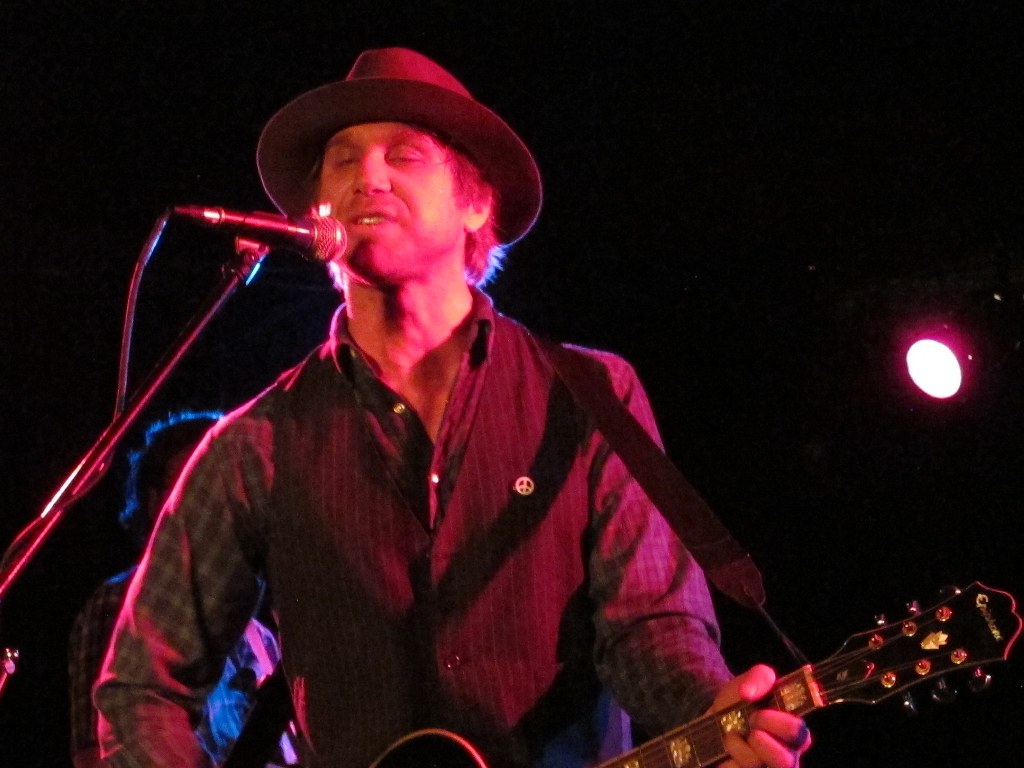
When an interviewer asked Todd Snider why he’d written a memoir, the songwriter gave him two words: “Just money.” Then came the part that sounded more like Snider. The book meant that when someone on a plane asked what he did for a living, he could finally say he was an author.
Todd Snider’s net worth at the time of his death was estimated at $3 million by Finance Monthly. That was the publication’s estimate, not a figure confirmed by Snider or a public accounting of his estate. Snider himself said he preferred not to know exactly how much he had because he didn’t want the answer deciding what he did next.
One decision in particular puts that into perspective. For East Nashville Skyline, the album that became a favorite among his listeners, Snider and his friends made the record first. Only then did he take it to his label and find out whether anyone wanted it.
The Night a Bar Owner Noticed What Happened Between Songs
Snider traced his live act back to an open mic when he was about 21. He’d gone up intending to play three songs. After the first, nerves got the better of him, and he started talking about the one he was going to play next. The audience liked hearing him talk. A bar owner pointed out afterward that he had two things going for him: he could write a song, and he could hold a room between numbers.
That observation helps explain how Snider could keep touring an album a decade after its release. Someone who already owned the record still had a reason to buy a ticket. At a 2017 show at Stuart’s Opera House in Ohio, for instance, the audience heard “Beer Run” and “Play a Train Song.” They also got a story about Snider waiting outside a recording session, hoping to catch Johnny Cash and play him a few songs. Cash never came out. Snider got a story out of it anyway.
What Jimmy Buffett’s Record Deal Gave Him
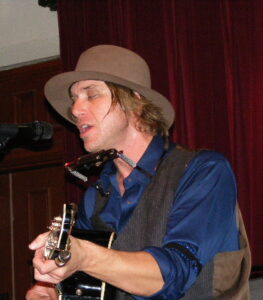
Todd Snider at the Cactus Cafe in Austin, Texas. Photo: Ron Baker / Wikimedia Commons, CC BY-SA 3.0.
Before he had a national audience, Snider was playing clubs in Memphis. Songwriter Keith Sykes, who had played in Jimmy Buffett’s Coral Reefer Band, helped get him an opening slot at a Buffett show. Buffett heard his set and offered him a deal. In 1994, his Margaritaville label released Snider’s debut, Songs for the Daily Planet.
Years later, Snider remembered the deal rather differently from the usual story about a young musician signing with a big label. He didn’t recall executives asking him to sound more commercial. In his telling, the people who signed him liked the songs he already wrote and were willing to see what they could do with them. He even joked that they might simply have wanted someone who could sing at the office parties.
One of those early songs, “Alright Guy,” eventually found a second audience. Gary Allan recorded it and made it the title track of his 2001 country album. That’s a useful distinction in Snider’s career: someone could buy a Gary Allan record, hear a Todd Snider song and never have attended one of Snider’s shows. The songwriting credit is documented; the size of his royalty check isn’t.
The Album He Joked Might Leave Him Mowing Lawns
At John Prine’s independent label, Oh Boy Records, Snider had access to something he valued enough to take seriously: Prine’s opinion of an unfinished song. While writing “D.B. Cooper,” Snider remembered that his father had wanted the fugitive caught, while he’d been rooting for him to get away. Prine suggested that what had stayed with him might be the experience of disagreeing with his dad. Listen to the song with that in mind and it becomes as much a childhood memory as an outlaw story.
For East Nashville Skyline, though, Snider wanted Prine to hear the finished record. He gathered his friends and made it without first asking the label to approve it. If they turned it down, he joked, he’d be mowing everybody’s lawn for years. Oh Boy released the album in 2004.
A good measure of how far those songs traveled came from a writer eating pizza in Tillamook, Oregon, years later. Three local law enforcement officers were at the next table. When the writer mentioned a song about their jail, all three started singing Snider’s “Tillamook County Jail.” They hadn’t been on duty when the incident behind the song happened. They just knew the words.
His Stories Found a Life Offstage
If a listener wanted to take some of the concert home, there was Near Truths and Hotel Rooms. The 2003 live album preserved the talking alongside songs such as “Beer Run.” His memoir, I Never Met a Story I Didn’t Like: Mostly True Tall Tales, gave him another place to put the stories. By the time he discussed the book with Arizona Public Radio in 2015, he’d spent nearly a quarter century on the road.
His records sometimes ran on a schedule entirely his own. He recorded Crank It, We’re Doomed in 2007, but shelved it after deciding it wasn’t ready for release. Listeners finally got the album in 2023, sixteen years later. In October 2025, he released High, Lonesome and Then Some. He died on November 14 that year, at 59.
Conclusion
Asked what he’d wanted as a young musician, Snider once said he wanted to tour and play. The records gave people songs to ask for. The covers put his writing in front of other singers’ audiences. And the stories gave even the fans who knew every verse something they hadn’t heard before. For a man who joked that writing a book let him call himself an author, he’d been making a living telling stories since that first nervous pause at an open mic.






Todd Snider Net Worth: The Financial Story Behind His Music Career

Jay Baruchel Net Worth: How the Canadian Actor Built His Career

Geddy Lee Net Worth From Toronto Rocker to Music Millions
Deborah Dubois’ Her Life With Barry Seal Beyond the Movie

Ivant Fields Helped His Son Chase a Dream He Once Had
