People
Anthony Perkins Net Worth: The Career Behind Norman Bates

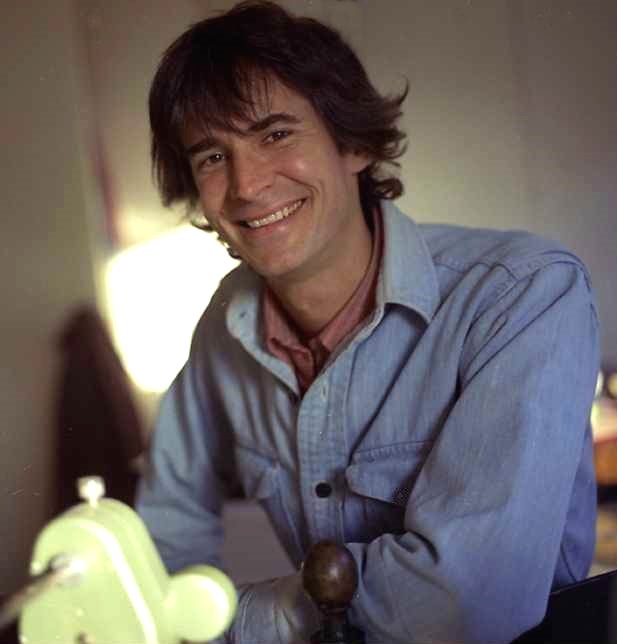
Anthony Perkins became so closely associated with Norman Bates that the character can seem to swallow the rest of his career. Yet before Psycho, he had already earned an Oscar nomination. Afterwards, he worked in European films, ensemble dramas and writing, and eventually directed a return to the motel that had made him famous.
Celebrity Net Worth estimates Anthony Perkins’s net worth at $2.5 million at the time of his death in 1992. Its page also displays a roughly $6 million inflation-adjusted equivalent. Those numbers describe different purchasing-power bases; they should not be presented as two separate fortunes.
Understanding Anthony Perkins’s Net Worth at His Death
Perkins died on September 12, 1992. A discussion of his wealth therefore needs a date attached, rather than treating him as a performer accumulating a current annual salary.
The $2.5 million figure is a published estimate. It is not an estate inventory or a publicly verified accounting of his property, savings, debts and contractual rights. The inflation-adjusted figure on the same profile is intended to translate the older amount into more recent dollars.
Neither figure establishes the present value of his estate or what his family inherited. That would require separate records. His continuing fame, meanwhile, tells us that audiences still watch his work; it does not disclose the terms under which any later payments might be made.
An Oscar Nomination Came Before Psycho
The American Film Institute’s filmography places Perkins in The Actress in 1953 and Friendly Persuasion in 1956. The latter gave him the role of Josh Birdwell, a young man in a Quaker family confronted by the American Civil War.
The Academy’s official record confirms his supporting actor nomination for Friendly Persuasion at the 1957 Oscars. He was therefore an Academy Award nominee several years before audiences met Norman Bates.
Other early credits included Fear Strikes Out, in which he played baseball player Jim Piersall, and On the Beach. These films are useful reminders that his screen identity was still taking shape before his most famous performance.
Seen in that order, Psycho becomes a turning point within an existing career, rather than the moment an unknown actor suddenly appeared from nowhere.
Norman Bates Became the Role Audiences Remembered
In Alfred Hitchcock’s Psycho, released in 1960, Perkins played the apparently mild-mannered proprietor of an isolated motel. The effect depends on the way ordinary politeness and unease can occupy the same performance.
It is easy to remember the film through its most shocking scenes. Perkins’s contribution also lies in the quieter exchanges: the nervous manner, the hesitation and the sense that a conversation may be concealing something.
The character created an unusually lasting association between an actor and a role. That kind of recognition can be professionally valuable, but it can also make the rest of a filmography harder for audiences to see.
For a net worth article, the important limit is straightforward. A film’s cultural importance does not reveal its actor’s salary, ownership rights or lifetime earnings from it. The public career record is much stronger than a speculative calculation based on the film’s reputation.
His Film Career Continued Beyond the Bates Motel
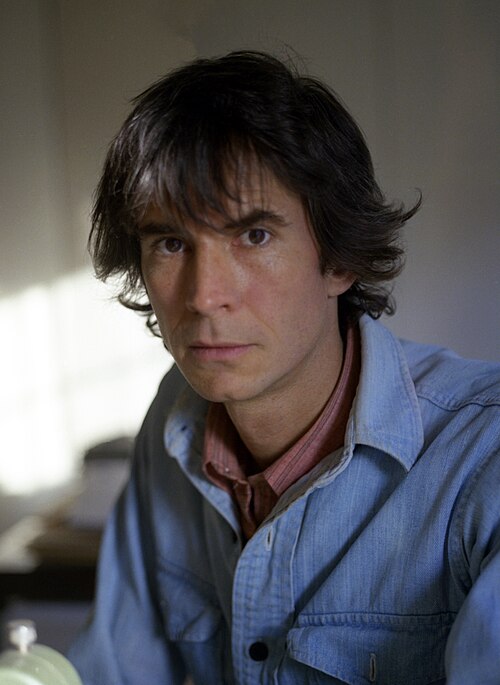
Anthony Perkins in New York. Photo: Allan Warren / Wikimedia Commons. CC BY-SA 3.0.
Perkins won the Best Actor award at Cannes in 1961 for Goodbye Again, listed by the festival under its French title, Aimez-vous Brahms?. The award followed Psycho and recognized a very different performance.
The AFI filmography also records roles in Catch-22 and Murder on the Orient Express. A supporting part within a large ensemble asks for something different from carrying the central mystery of a thriller.
He also has a writing credit on The Last of Sheila, the 1973 mystery. That credit widens the professional picture beyond acting alone, although it does not provide a public figure for his writing income.
These projects do not erase Norman Bates. They demonstrate that Perkins continued working in different capacities while that character remained the best-known part of his public image.
Psycho III Put Him Behind the Camera
Perkins returned as Norman in Psycho II in 1983. For Psycho III, released in 1986, he also became the director. AFI’s production record lists him in both capacities.
The catalogue’s account of the production describes his wife encouraging the move into directing. It also records that Perkins wanted Virginia Gregg, who provided Mother’s voice, present for a week so the conversations could be performed together.
That detail offers a more revealing view of his work than a guessed paycheque. An actor strongly associated with one character was now making decisions about how the surrounding film should be constructed.
Directing the sequel was an additional professional responsibility, not proof of ownership of the franchise. The distinction matters whenever several different film credits are used to explain a performer’s financial history.
Conclusion
Anthony Perkins’s estimated net worth of $2.5 million at his death should be read as a historical estimate, with the roughly $6 million figure on the source page understood as an inflation adjustment.
His career deserves a similarly careful reading. Norman Bates made him unforgettable, but an Oscar nomination, a Cannes award, ensemble films, writing and directing show how much work existed beyond that single association.
FAQs
What was Anthony Perkins’s net worth when he died?
Celebrity Net Worth estimates it at $2.5 million in 1992. Its approximately $6 million figure is an inflation-adjusted equivalent, not a second estate valuation.
Did Anthony Perkins win an Oscar?
He was nominated for supporting actor for Friendly Persuasion. The nomination came before Psycho.
Did Anthony Perkins direct a Psycho film?
Yes. He directed Psycho III and also starred in it as Norman Bates.
Related reading: Michael Bay’s directing and producing career and Kadeem Hardison’s life beyond his signature role.





Sally Field Net Worth: From Gidget to Two Oscars

Anthony Perkins Net Worth: The Career Behind Norman Bates

Christine Baranski Net Worth: Broadway, Diane Lockhart and Beyond
Deborah Dubois’ Her Life With Barry Seal Beyond the Movie

Ivant Fields Helped His Son Chase a Dream He Once Had
