Home Improvement
Barbeglue: What It Is, Uses, and Key Features

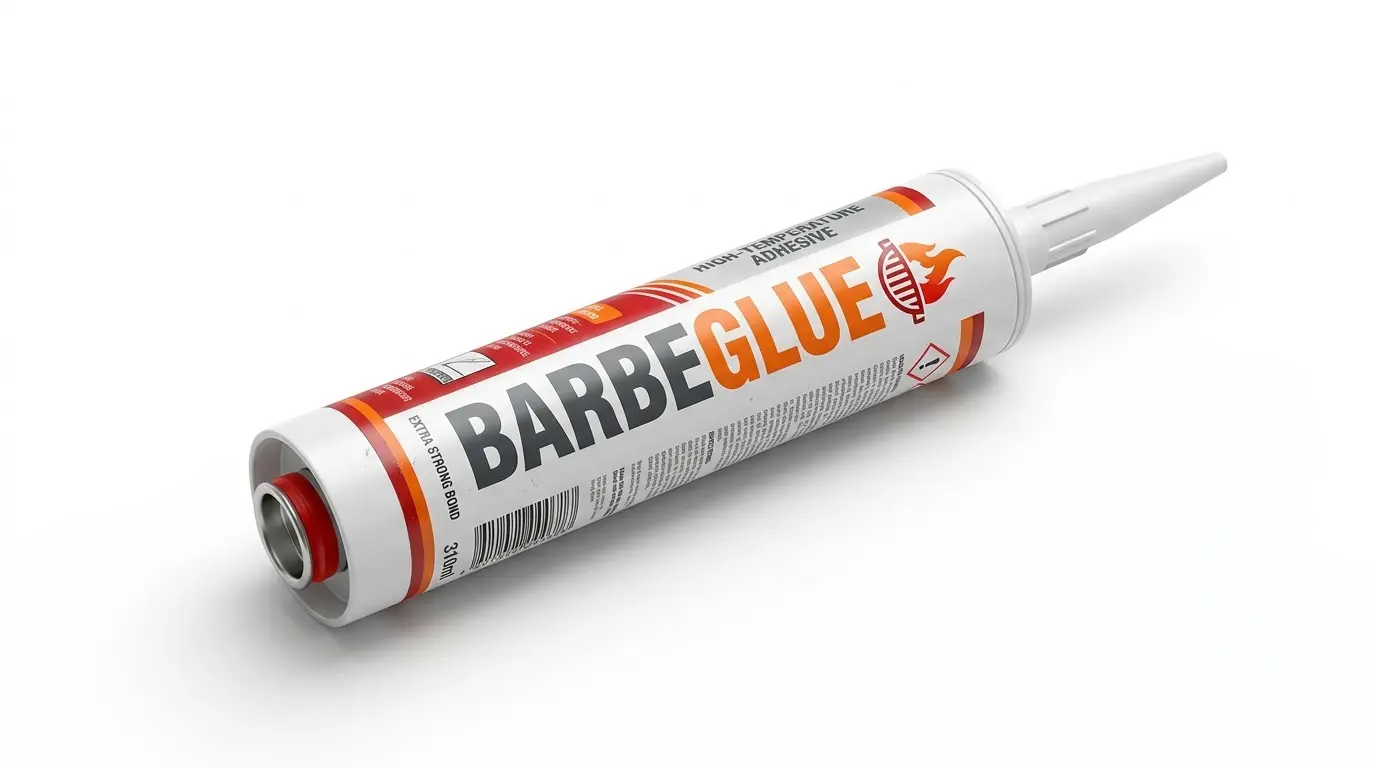
Building an outdoor barbecue requires more than concrete blocks and a cooking grill. Each component needs proper support, alignment, and secure connections. Otherwise, temperature changes and outdoor conditions may affect the structure over time. This is where Barbeglue becomes useful.
Barbeglue is a specialist adhesive designed for joining compatible materials, particularly in certain prefabricated masonry barbecue systems. Unlike ordinary household glue, it forms an elastic bond that can accommodate some movement between connected surfaces.
However, choosing the right adhesive involves more than looking for a strong bond. Users must also understand material compatibility, curing requirements, temperature limits, and manufacturer instructions.
What Is Barbeglue?
Barbeglue is a branded adhesive-sealant associated with Sarom, an Italian manufacturer of outdoor masonry barbecues.
Sarom identifies the product as Barbeglue Isocoll ECO 6056 in its technical documentation.
The adhesive uses a one-component silyl-terminated polymer formulation. As a result, users do not need to mix it with a separate hardener before application.
Once applied, the material reacts with moisture in the surrounding air and gradually forms an elastic bond.
This flexibility makes the product useful for certain construction joints where connected materials experience limited movement.
Barbeglue is intended for construction and assembly applications, not for food contact or use on cooking surfaces.
Barbeglue Key Specifications
Understanding the technical properties helps users determine whether the adhesive suits a particular application.
The following information comes from Sarom’s March 2021 technical data sheet for Isocoll ECO 6056.
| Feature | Specification |
|---|---|
| Product name | Barbeglue Isocoll ECO 6056 |
| Associated manufacturer | Sarom |
| Product type | Adhesive-sealant |
| Formulation | One-component silyl-terminated polymer |
| Appearance | White or grey paste |
| Density | Approximately 1.42 g/cm³ |
| Tack-free time | Approximately 30 minutes |
| Curing rate | Approximately 3 mm per 24 hours |
| Application temperature | +5°C to +50°C |
| Stated service temperature | -40°C to +100°C |
| Elongation at break | Approximately 400% |
| Technical sheet packaging | 290 ml cartridge; 600 ml pack on request |
These figures describe the documented formulation under specified conditions. For example, the curing rate and tack-free time relate to a temperature of 23°C and 50% relative humidity.
Actual performance may vary with environmental conditions, joint dimensions, and the specific product supplied.
How Does Barbeglue Work?
Barbeglue works through a moisture-curing chemical process.
After application, atmospheric moisture gradually reacts with the adhesive. Consequently, the material changes from a paste into an elastic solid.
Unlike a brittle joint, a flexible adhesive bond can accommodate limited movement between compatible surfaces.
This property matters because outdoor structures experience changes in temperature, moisture, and environmental exposure.
However, flexibility does not mean the material can tolerate unlimited expansion, severe structural movement, or direct flame exposure.
Proper joint design and material selection remain essential.
Furthermore, the adhesive cannot replace mechanical supports, reinforcement, or other components required by the barbecue manufacturer.
What Are the Main Uses of Barbeglue?
Barbeglue has several documented applications. Nevertheless, its suitability depends on the exact product formulation and manufacturer requirements.
1. Masonry Barbecue Assembly
One important use involves assembling certain prefabricated masonry barbecues.
Sarom’s barbecue instructions identify Barbeglue as an option for joining specified components.
For example, installers may apply the adhesive between designated concrete sections during assembly.
However, users must follow the model-specific assembly diagram rather than assume every barbecue component requires glue.
2. Joining Compatible Construction Materials
The Isocoll ECO 6056 technical sheet identifies several compatible material categories, including brick, cement, stone, wood, and certain metals.
Therefore, the adhesive may support bonding applications involving these materials when the joint conditions fall within the product’s stated limitations.
Still, material compatibility alone does not confirm suitability for every structural or high-temperature application.
3. Sealing Selected Joints
The manufacturer also describes the formulation as an adhesive-sealant.
It can also be used for compatible sealing applications, including selected joints, cracks, and crevices. However, it should not be treated as a substitute for structural repairs.
4. Other Technical Applications
The technical sheet lists additional applications involving vehicles, caravans, containers, plumbing, roofing, and industrial joints.
These uses reflect the broader properties of the adhesive formulation.
They do not automatically mean every Barbeglue-branded cartridge carries the same approvals for all applications.
Key Features of Barbeglue
Several characteristics distinguish this adhesive from ordinary household glue.
Elastic Bonding
Barbeglue retains elasticity after curing.
As a result, the finished joint can accommodate limited movement without behaving like a completely rigid bond.
Weather Resistance
The technical documentation describes resistance to weathering and ultraviolet exposure.
This feature can benefit compatible outdoor applications.
Nevertheless, correct installation and ongoing maintenance remain important.
Convenient Application
The one-component formulation simplifies preparation because it does not require mixing separate chemical components.
Users can apply the material with a suitable manual or pneumatic cartridge gun.
Paintable Surface
The manufacturer states that users can paint over the adhesive after curing with many industrial coating systems.
However, paint compatibility varies. Therefore, testing the chosen coating before widespread application is advisable.
Solvent-Free Formulation
The technical sheet describes Isocoll ECO 6056 as free from solvents and isocyanates.
Even so, users should follow the current safety documentation and avoid unnecessary contact with uncured adhesive.
How to Apply Barbeglue Correctly
Proper application helps achieve reliable results.
Step 1: Check the instructions. Read the barbecue assembly manual and the adhesive’s current technical data sheet. Confirm that the product suits the intended joint.
Step 2: Prepare the surfaces. Remove dirt, grease, dust, rust, and loose particles. Ensure the surfaces meet the manufacturer’s preparation requirements.
Step 3: Check the temperature. Apply the adhesive only within the recommended application temperature range.
Step 4: Apply the adhesive. Use a suitable cartridge gun and follow the specified joint arrangement. Avoid guessing the required amount or bead size.
Step 5: Position the components. Place each element carefully and check its alignment with a spirit level where appropriate.
Step 6: Install required supports. Fit any brackets, screws, or other components specified in the assembly instructions.
Step 7: Allow sufficient curing time. Keep the assembly undisturbed for the period required by the manufacturer.
Step 8: Inspect the finished assembly. Check alignment, joint condition, and compliance with the installation instructions before using the barbecue.
The reviewed Sarom assembly manual instructs users to wait at least 48 hours before using the assembled barbecue. This is a model-specific assembly instruction, not a universal curing guarantee for every Barbeglue application.
Is Barbeglue Heat Resistant?
Heat resistance is one of the most important considerations.
Barbeglue appears in the assembly instructions for certain outdoor barbecues. However, this does not mean users can expose the adhesive directly to flames or hot charcoal.
The reviewed Isocoll ECO 6056 technical sheet states a service temperature range of -40°C to +100°C.
Therefore, users should not assume that the adhesive can withstand temperatures of 200°C, 300°C, or higher.
The temperature at an adhesive joint can differ significantly from the temperature inside a barbecue’s cooking chamber.
For this reason, manufacturers specify where suitable adhesives should be applied.
Always follow the exact assembly diagram, and never use Barbeglue to repair a firebox or another directly heated component without explicit manufacturer approval.
Barbeglue vs. Ordinary Silicone and Refractory Mortar
These materials serve different purposes.
| Material | Main Characteristics |
|---|---|
| Barbeglue | Specialist elastic adhesive-sealant for approved applications |
| Ordinary silicone | Flexible sealant with properties that vary by formulation |
| Refractory mortar | Mineral-based bonding material intended for specified high-temperature masonry applications |
| General construction adhesive | Broad category with varying strength, compatibility, and temperature limits |
Sarom’s reviewed barbecue instructions specifically warn against ordinary silicone glue and non-refractory mortar.
Instead, they identify suitable special adhesive or approved refractory mortar for the relevant assembly steps.
Therefore, users should never substitute products solely because they look similar or have comparable packaging.
Common Application Mistakes to Avoid
Even a suitable adhesive may perform poorly when users ignore installation requirements.
One common mistake involves applying glue to dirty or damp surfaces without checking the product’s instructions.
Another problem occurs when installers use too much adhesive or fail to position the barbecue components correctly.
Similarly, some people confuse the adhesive’s initial tack-free time with complete curing.
A surface may feel dry while material deeper inside the joint continues to cure.
Finally, using an unapproved substitute near hot components can create serious safety risks.
Following the manufacturer’s instructions helps reduce these problems.
Storage and Safety Considerations
Proper storage helps preserve the adhesive’s intended properties.
Sarom’s technical sheet states that the documented formulation can remain in its original packaging for up to 24 months when stored under the specified conditions.
The recommended storage range is 5°C to 25°C, in a cool and dry location away from heat sources.
Before application, users should check the packaging condition and the product’s shelf life.
Additionally, gloves and other protective equipment may be appropriate according to the current safety data sheet.
Keep the adhesive away from children, food, and cooking utensils.
Most importantly, do not assume that approval for barbecue assembly also means approval for direct food contact.
Conclusion
Barbeglue is a specialist adhesive-sealant that supports the assembly of certain prefabricated masonry barbecues.
Its one-component formulation, elastic bonding properties, and documented weather resistance make it useful for suitable construction applications.
However, users must pay close attention to material compatibility, surface preparation, curing requirements, and temperature limits.
Barbeglue is not a universal high-temperature glue. Therefore, the safest approach is to follow the exact barbecue model’s instructions and use only approved materials.
Understanding these requirements helps users make better installation decisions and avoid unnecessary damage.
Frequently Asked Questions
What is Barbeglue used for?
Barbeglue helps join specified components in certain prefabricated masonry barbecue systems. Its documented formulation also supports other compatible bonding and sealing applications.
Is Barbeglue waterproof?
The manufacturer describes the adhesive as weather-resistant. However, users should confirm whether their intended joint requires a specific waterproofing performance or certification.
How long does Barbeglue take to dry?
The reviewed technical sheet gives a tack-free time of approximately 30 minutes and a curing rate of around 3 mm per 24 hours under specified conditions. Complete curing depends on joint size and environmental conditions.
Can Barbeglue withstand direct flames?
Do not assume so. The reviewed technical sheet lists an upper service temperature of +100°C. Follow the manufacturer’s instructions and keep the adhesive away from unapproved direct-flame applications.
Can I use ordinary silicone instead of Barbeglue?
Not for the Sarom assembly instructions reviewed here. The manufacturer specifically warns against ordinary silicone glue and recommends approved assembly materials.
Can Barbeglue bond concrete and metal?
The documented formulation lists cement-based materials and several metals among its compatible substrates. However, actual suitability depends on preparation, joint conditions, and manufacturer approval.


Homecz: What Does It Mean and What Does It Refer To?

Barbeglue: What It Is, Uses, and Key Features

Windstrebe: How Diagonal Bracing Keeps Structures Stable
Deborah Dubois’ Her Life With Barry Seal Beyond the Movie

Ivant Fields Helped His Son Chase a Dream He Once Had
