
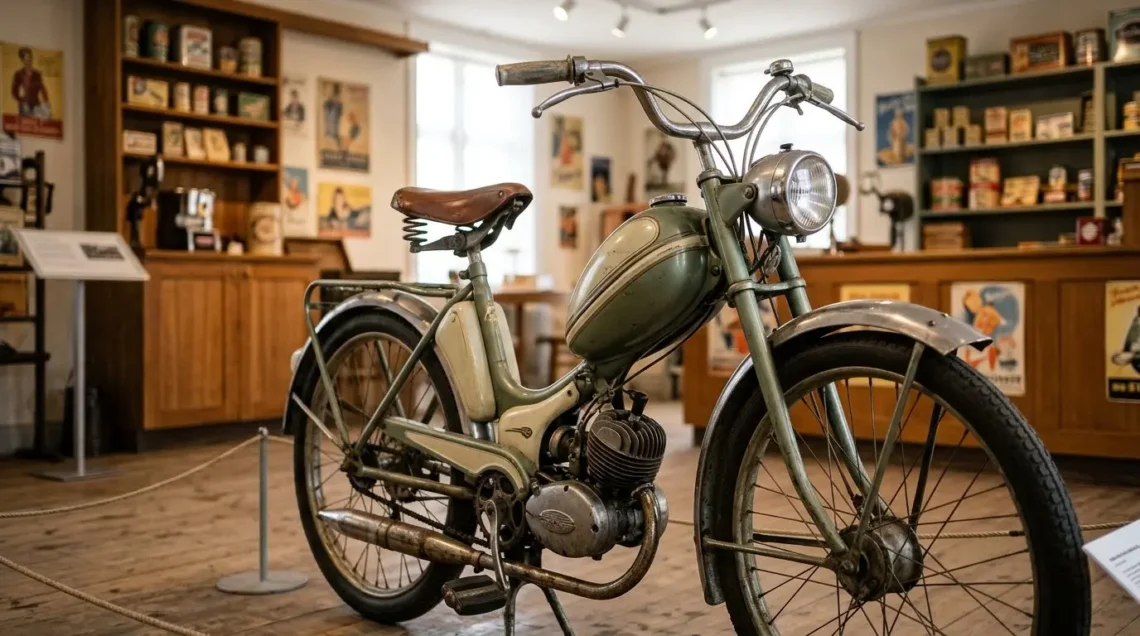
Old vehicles often tell stories that go beyond transportation. They reflect how people travelled, worked, socialized, and experienced everyday life in earlier generations. In Sweden, mopeds became an important part of this history, particularly during the middle decades of the twentieth century.
Mopedum, also known as Mopedum Svenska Nostalgimuseet, was a Swedish museum that celebrated this connection between vintage mopeds and everyday culture.
Located in Nynäshamn, south of Stockholm, the museum displayed classic two-wheelers alongside recreated homes, shops, clothing, toys, and household objects. Its exhibitions focused mainly on the period between 1952 and 1979.
Although the original attraction closed in December 2022, parts of its collection found a new home in Stockholm.
So, what made Mopedum special, what could visitors see there, and where can its historical exhibits be found today?
What Was Mopedum?
Mopedum was a private nostalgia museum in Nynäshamn, Sweden. Its full Swedish name was Mopedum – Svenska Nostalgimuseet.
The museum focused on vintage mopeds and the everyday environments associated with earlier Swedish life.
Unlike a conventional vehicle museum, it did not concentrate exclusively on engines, mechanical specifications, or transportation technology.
Instead, its exhibitions placed mopeds within a broader cultural setting.
Visitors could explore historical objects and recreated environments that reflected Swedish homes, shops, fashion, and everyday activities from previous decades.
This combination helped connect transportation history with personal memories and social changes.
Where Was Mopedum Located?
The former museum stood at Vikingavägen 39, 149 40 Nynäshamn, Sweden.
Nynäshamn is a coastal town south of Stockholm, known for its harbour and connections to the Stockholm Archipelago.
Mopedum occupied a former public indoor swimming hall, which provided enough space for its extensive displays and recreated historical environments.
The building allowed visitors to move between different scenes rather than viewing everything in traditional display cabinets.
However, Vikingavägen 39 is now a historical museum address. The original attraction permanently closed in December 2022, so older travel listings should not be treated as current visitor information.
What Could Visitors See Inside the Museum?
The exhibitions combined vintage transportation with objects from ordinary Swedish households and businesses.
Vintage Mopeds From 1952 to 1979
Mopeds formed the central attraction.
The collection included Swedish and European examples representing several decades of design and mechanical development.
Different models demonstrated how manufacturers approached practical transportation, styling, and engineering.
For enthusiasts, these vehicles offered an opportunity to explore the history of classic mopeds.
For general visitors, they also provided a glimpse into a time when small motorized two-wheelers played an important role in everyday mobility.
Recreated Swedish Homes
The museum also recreated domestic environments from earlier generations.
These displays included furniture, household accessories, and decorative details that reflected changing interior styles.
A recreated kitchen, for example, could show how families organized their homes during the 1950s.
Such environments helped visitors understand the everyday surroundings in which people used and owned mopeds.
Shops and Everyday Objects
Historical shop displays formed another part of the museum experience.
Visitors could encounter traditional retail settings and familiar household products from earlier decades.
Clothing, toys, signs, and other objects added detail to the exhibitions.
Together, these items presented a broader picture of Swedish consumer culture and daily life.
Why Were Mopeds Important in Swedish History?
Mopeds represented practical transportation and personal independence for many people.
During the twentieth century, these relatively affordable vehicles provided an alternative to walking, cycling, and more expensive motor vehicles.
For young people, owning a moped could represent an important step toward independence.
For workers and families, it offered another way to travel between home, work, and local destinations.
The vehicles also reflected technological changes in engine design, manufacturing, and transportation regulations.
By displaying mopeds alongside period interiors and household objects, Mopedum connected these developments with the lives of ordinary people.
The Historical Period: 1952–1979
The museum’s main historical focus covered approximately 27 years.
The year 1952 represents an important milestone in Swedish moped history, while the late 1970s marked the end of the period highlighted by its exhibitions.
During these decades, mopeds became recognizable features of Swedish everyday life.
Their designs changed alongside developments in manufacturing, consumer products, and personal transportation.
A simplified timeline helps explain the period:
| Period | Historical context |
|---|---|
| 1952 | Important milestone in Swedish moped regulations |
| 1950s | Mopeds became associated with practical everyday transport |
| 1960s | Design and model variety developed |
| 1970s | Mopeds remained part of youth and transport culture |
| 1979 | End of the museum’s main historical exhibition period |
The museum used this timeline to place its vehicles within a wider story of Swedish society.
Who Created Mopedum?
Mopedum was created by Nisse and Lotta Skogmyr.
Their interest in historical mopeds and nostalgic objects helped shape the museum’s collection and presentation.
Rather than simply gathering old vehicles, they developed an exhibition that connected mechanical history with familiar household and commercial environments.
Their approach made the museum relevant to both vintage vehicle enthusiasts and visitors interested in Swedish cultural history.
Eventually, the creators decided to retire, bringing the original museum’s operation to an end.
When Did Mopedum Close?
The original museum closed permanently in December 2022.
The regional tourism organization Explore Archipelago recorded the closure on its museum listing.
This marked the end of the physical attraction in Nynäshamn after approximately ten years of operation.
The closure also created an important question: what would happen to the collection?
Fortunately, parts of its historical material received another opportunity for public display.
What Happened to the Collection After Closure?
Vällingby Centrum in Stockholm acquired the contents of Mopedum’s collection and a number of its mopeds when Nisse and Lotta Skogmyr retired.
The centre chose to preserve the material rather than allow the collection to be completely dispersed.
Today, its Nostalgimuseum presents historical environments and objects from the 1952–1979 period.
The exhibition includes:
- A traditional Swedish shop
- A recreated 1950s kitchen
- A children’s room featuring 1970s decoration
- A selection of Swedish and European vintage mopeds
- Other historical household and cultural objects
The moped display includes examples from manufacturers such as Crescent, Husqvarna, Monark, Fram, and Victoria.
Importantly, this is a new exhibition at Vällingby Centrum, not a reopening of the original Nynäshamn museum.
Can You Visit Mopedum Today?
The original museum at Vikingavägen 39 is permanently closed.
However, visitors interested in its historical collection can explore the Nostalgimuseum at Vällingby Centrum in Stockholm.
The displays are spread across five exhibition areas within the shopping centre.
According to the centre’s official visitor information, the exhibition is accessible during its normal opening hours.
Before travelling, check the latest information on the centre’s website to confirm access arrangements.
You can also explore its official page:
Vällingby Centrum – Nostalgimuseum
Why Does Mopedum Still Attract Interest?
Although the original attraction no longer operates, its story remains relevant to people interested in vintage vehicles and Swedish social history.
Classic mopeds provide a connection with earlier generations.
Their designs reflect the materials, engineering choices, and transportation needs of their time.
Meanwhile, the surrounding household exhibits show how everyday environments changed during the same decades.
This combination makes the collection interesting beyond the traditional vehicle-collecting community.
It also demonstrates how museums can preserve cultural memories through ordinary objects.
Conclusion
Mopedum was a Swedish nostalgia museum in Nynäshamn that connected vintage mopeds with everyday life between 1952 and 1979.
Created by Nisse and Lotta Skogmyr, it displayed classic two-wheelers alongside recreated homes, shops, clothing, toys, and household objects.
The original museum permanently closed in December 2022 when its creators retired.
However, Vällingby Centrum acquired the contents of the collection and a number of its mopeds. Parts of this material now appear in the Stockholm centre’s Nostalgimuseum.
Although the original attraction has disappeared, its historical collection continues to introduce visitors to an important period of Swedish transportation and everyday culture.
FAQs
What was Mopedum?
Mopedum was a Swedish nostalgia museum dedicated to vintage mopeds and everyday Swedish life from 1952 to 1979.
Where was the museum located?
It was located at Vikingavägen 39 in Nynäshamn, south of Stockholm, Sweden.
Is Mopedum still open?
No. The original museum permanently closed in December 2022.
Who created Mopedum?
Nisse and Lotta Skogmyr created and operated the nostalgia museum.
What did Mopedum display?
Its exhibitions included vintage mopeds, recreated homes, shops, clothing, furniture, toys, and other historical objects.
What happened to the collection?
Vällingby Centrum acquired the contents of the collection and several mopeds. Parts are now displayed in its Nostalgimuseum.
Where can visitors see former Mopedum exhibits?
Visitors can explore parts of the collection at the Nostalgimuseum in Vällingby Centrum, Stockholm.
What years did the museum focus on?
Its main historical period was 1952–1979.
Was Mopedum only a motorcycle museum?
No. Although vintage mopeds were central to its identity, the museum also presented Swedish domestic life, shopping, fashion, and everyday culture.
Why did Mopedum close?
Its creators, Nisse and Lotta Skogmyr, decided to retire, and the original museum closed in December 2022.